People usually tend to believe what they see rather than what they hear (hence the term “eyewitness”). But is what we see always the truth?
Most of us are lucky to see the world in all its colours and shades, in all its lights and darks. But what happens when the colour is “taken away”? Does the world become dull and sad?!
I’ve been reading quite a lot lately and one of the books I stumbled upon recently is Charlie Chaplin’s biography. Reading it has brought back some childhood memories, because as a kid I used to watch a lot of Chaplin’s movies, but growing up I’ve kind of forgotten how good they are. Despite the fact that they are silent movies and in black and white, I remember always laughing very hard and wanting to see more of his movies. It might have been the ever-so-clumsy character he played or the added goofiness the piano tunes evoked, but they always made me laugh and I enjoyed the movies a lot. I was probably too small to read and understand the text prompts in-between or even understand the real story behind whole movie, but I suppose I just created my own version of those movies. I could add my own “colours” to it and create a meaning of my own. No words needed. No colours. Sometimes it’s just about the feeling it creates.
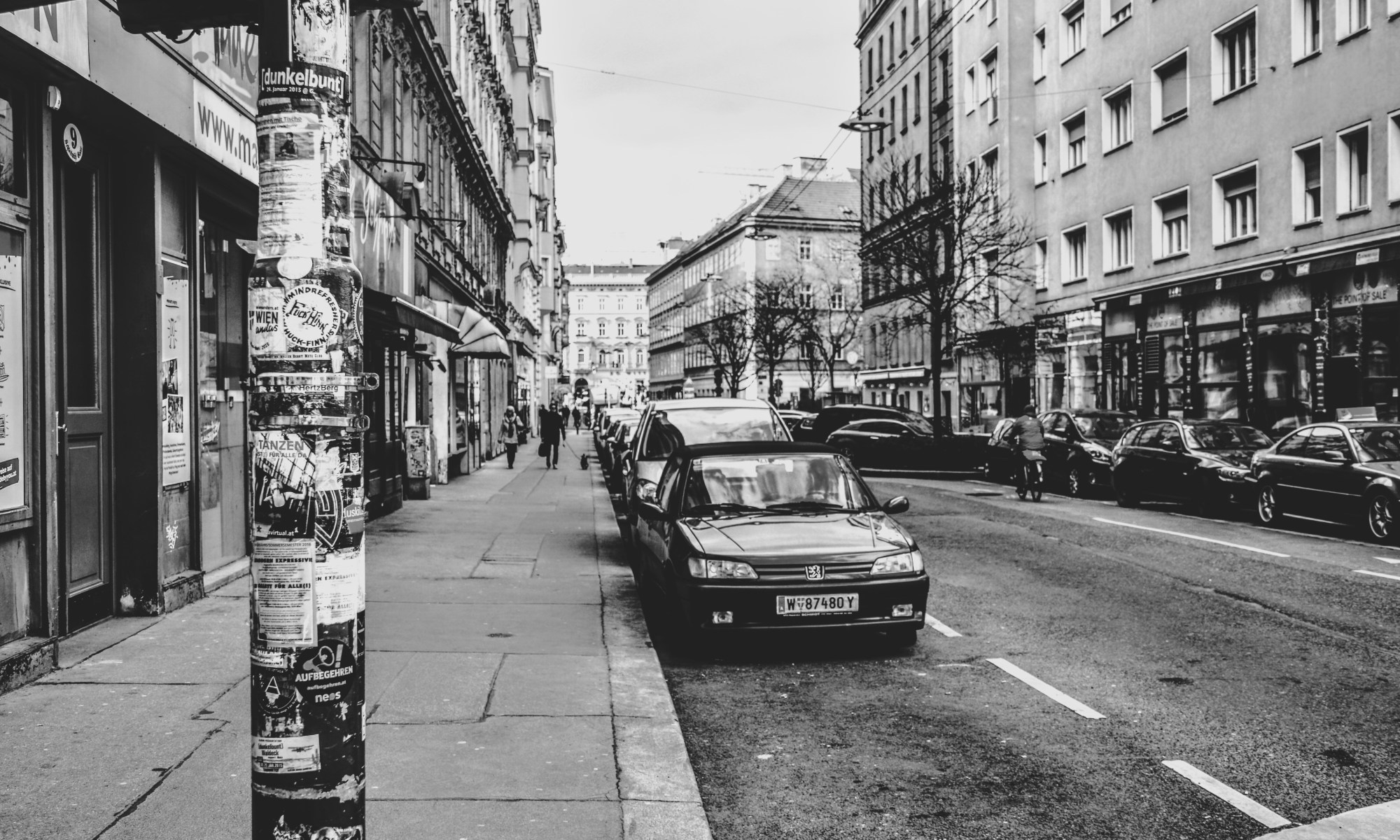
Now imagine a beautiful photograph of a cityscape. It’s autumn. The weather is a bit chilly, but no rain. A few clouds playing hide and seek with the sun. Buildings packed together, some taller than others. The streets are covered with occasional shadows the buildings cast. Walkways are lined with cars parked tightly one after another. People are running their daily errands. Some rushing to work. Some waving from the windows to say “bye” to a loved one. Some noticing the surroundings and enjoying the moment. It’s a city you’ve never been to before, but would want to go to. But there’s a twist – this photo is the only photograph of this place available – no other images of it in any books or instagram or google or anywhere else for that matter. Just this one photo (yes, I know, impossible in these days, but please go along with it). But the photo is black and white – the shape of the city is visible, but not its colours. What if everything in this city is monochrome? No colours. Everything is just a combination of black and white and different shades of grey, even people. Would you still want to go there? Would you accept the place as it is, beautifully out of place? Or would you hope that once you get there, it would be in full colours, just like every other city in the world?

Much like everything else these days, even colours are labelled with a definition of what they are supposed to stand for, of what they are expressing. Red typically stands for power, passion, desire, love and danger. Green for nature, environment, good luck, inexperience and envy. Blue for peace, security, confidence, water, stability and protection. Yellow for joy, optimism, happiness, hope and warning. etc. (read more about colours and their meanings HERE).
I’m a creative person, so I like colours a lot, but I’m also all for calmness and peacefulness. Quite a number of people have told me that I am a “rational artist”. Mostly meaning that in my daily work I can crunch numbers, make presentations, manage documents or do whatever else you can think of an office mouse does – maybe saying “following company’s policies” would be the right thing to say. However, the other side of me is an artist with a messy creative process. Abstract paintings are my favourite, because there’s a sense of freedom in them. No visible pre-written story attached, allowing the viewer to interpret it however he or she feels like. Sometimes when I am creating such a painting, I just splash layers of colours on top of each other, using whatever’s handy to make them mix or blend into or divide from each other. Just going with the feeling of how I want it to be. No restraints. Nothing too little. Nothing too much (for the author at least). A perfect mess, if you’d like.
In my home I’ve tried to be smart about the colour choices, so I chose only the ones that felt right rather than what the trend is. After all, I have to live with my choices! I suppose everyone has a few special somethings (a feature, a bit of predictability) in them that makes a friend say “That is so you!”. Be it laughing at inappropriate jokes, wearing colourful socks, singing in the car, all of these combined or something completely different. Sometimes you don’t even realize it yourself, until someone tells you. For example, for me it was when a friend of mine found out that I had covered my bedroom walls with a dark brown wallpaper (like very dark, almost black) and she just went: “I knew it. That is so you!”. I never thought of it as a “thing” about me. But to be honest, I never even considered having the room in any other colour, so maybe it is. I suppose it’s a somewhat uncommon choice, because a lot of people are afraid to use dark colours in interiors. Mainly because they tend to think it makes the room feel sad or repressing, but it doesn’t have to be so. It’s all about how you mix everything. For me, the dark wallpaper adds peacefulness and cosiness. I know it’s not what everyone likes, but not everyone has to. A home is supposed to be a collection of what you love and enjoy, colours included.

“Brown is friendly and welcoming. It is loyal, trustworthy and reliable, in a practical and realistic way. In colour psychology the colour brown is referred to as honest, genuine and sincere. It refers to the hard-working, diligent and reliable, with both feet planted firmly on the ground. Brown is sensual, sensitive and warm, and gives one a sense of calmness and comfort. It is a practical and sensible colour, indicating common sense. It is a colour that in no way calls for perfection, but rather promotes order and organization”.
I’d like to think that the above definition also applies to me as a person, so it might be for that reason I’m so comfortable having a good night’s sleep in a dark interior. In my little den. But being a Libra-sign, I am all about balance, so my living room is bright and light, which makes these rooms exist in perfect harmony just like the “yin and yang”.
“In Chinese philosophy, yin and yang (lit. “dark-bright”, “negative-positive”) describes how seemingly opposite or contrary forces may actually be complementary, interconnected, and interdependent in the natural world, and how they may give rise to each other as they interrelate to one another”.
There’s also been some discussion about whether black and white are even colours. The answer to this question is for everyone to define themselves, because what’s the truth of mine, might not be the truth of yours. Depending on how you want to look at them, there could be different answers. Here are some common examples:
“The black colour is the absorption of all colours and the absence of all light. Black hides things, while white brings them into the light. What black hides, white brings back again. Black is the ultimate darkest colour. It is the result of the complete absence or complete absorption of light and contains no shades in its purest form”.
“In colour psychology, white is the colour of new beginnings – wiping the slate clean. The colour white is a blank canvas, just waiting to be written on. Although white does not stimulate the senses significantly, it paves the way for the creation of something that the mind can imagine. White contains a balance of all colours in the spectrum that represents both the positive and negative aspects of all colours. There are no shades of pure white, because the colour is the combination of all colours”.
“If colour is solely the way physics describes it, the visible spectrum of light waves, then black and white are outcasts and don’t count as true, physical colours. Colours like white and pink are not present in the spectrum because they are the result of our eyes’ mixing wavelengths of light. White is what we see when all wavelengths of light are reflected off an object, while pink is a mix of the red and violet wavelengths. Black, on the other hand, is what our eyes see in a space that reflects very little light at all. That’s why, if you enter a room with the lights turned off, everything is dark and black”.

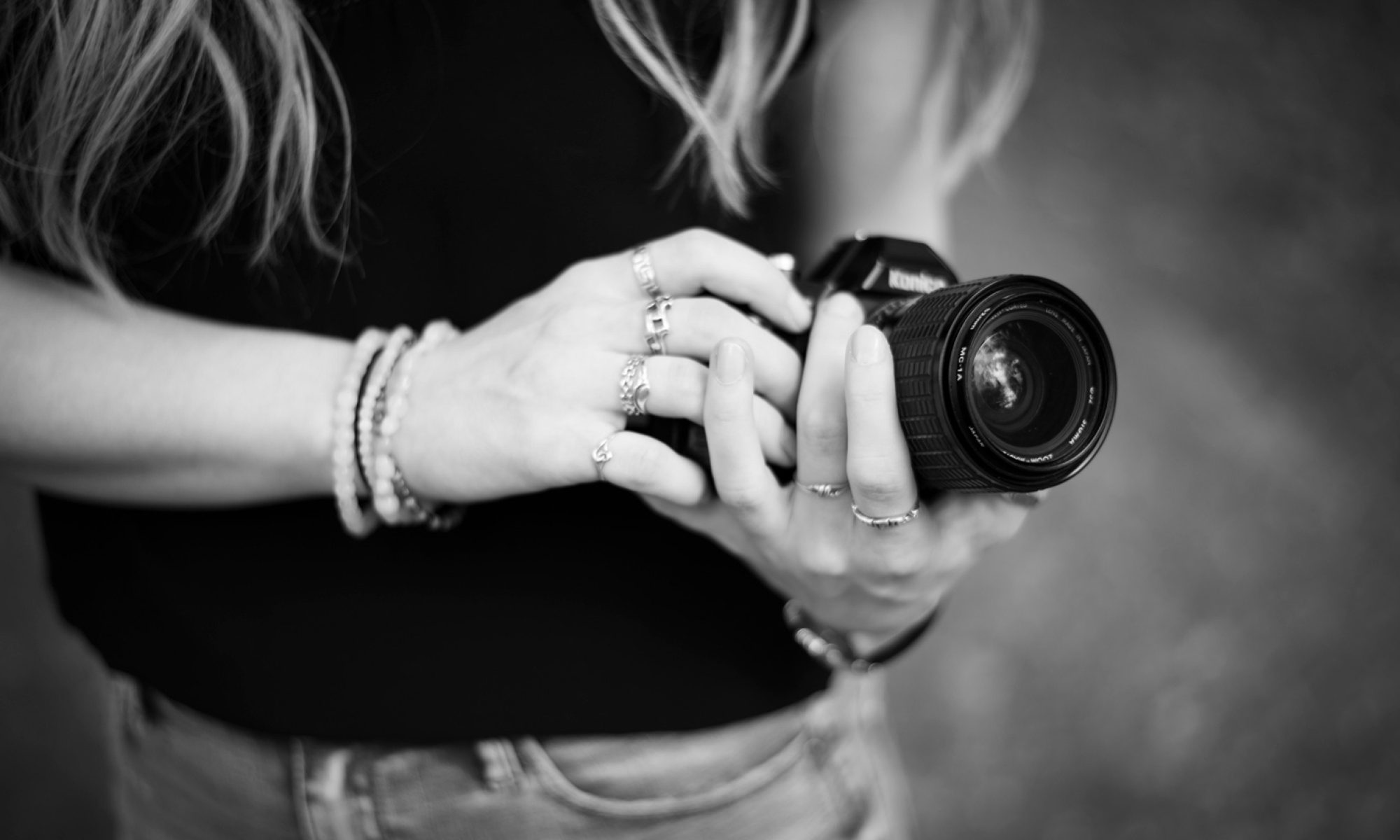
Black and white photos always catch my eye and my heart. There is just something magical about them. Maybe it’s the calmness and peacefulness they offer me in this sometimes crazy world. Maybe it’s the touch of mystery they present. Some depth that is not always present in the colour photo. Something that invites one to stop and look. It’s like everything in the photo is even. Equal to the other. Nothing calls for attention. There is no colour to catch your eye. Your eye must be the one who decides what it’s going to focus on. What is most important for him to see.
Therefore, a black and white photograph is a perfect lie I’ll believe every time, because whenever I look at it, I can paint the world in it in the colours of my choice, creating a story of my own. Some talk through music, some through art, some through poems or dance, some through photographs, etc. Be the outlet whatever it may be, there’s a storyteller in all of us. Even if the words are silent.
The Little Mute Boy
Federico García Lorca, 1898 – 1936
The little boy was looking for his voice.
(The king of the crickets had it).
In a drop of water
the little boy was looking for his voice.
I do not want it for speaking with;
I will make a ring of it
so that he may wear my silence
on his little finger.
In a drop of water
the little boy was looking for his voice.
(The captive voice, far away,
put on a cricket’s clothes.)
 AT VISUALS PHOTOGRAPHY
One Reply to “”